How Injuries to Key Players Reshape Not Only Winners but Secondary Betting Markets
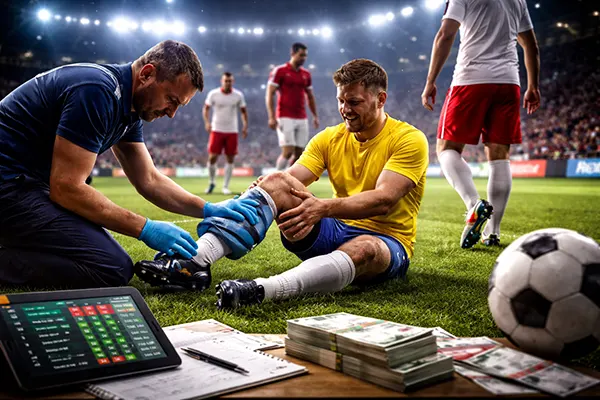
In modern sports betting, injuries are no longer just headline news about who might win or lose. They ripple through every layer of the market, affecting odds on totals, player statistics, handicaps, and even niche propositions. By 2026, bookmakers and sharp bettors alike rely on detailed data models that react instantly to injury reports, but understanding the deeper impact still offers a measurable edge. This article explains how the absence of a single player can shift not only outcomes but also the structure of secondary markets.
Why Key Player Injuries Influence More Than Match Results
At a basic level, removing a star player reduces a team’s overall strength. However, modern analytics shows that the effect is rarely linear. A striker missing in football or a quarterback absent in American football can change tactical structure, pace, and even psychological dynamics within a team. These shifts influence how games unfold minute by minute, not just the final score.
Bookmakers adjust main odds quickly, often within seconds of confirmed injury news. Yet secondary markets—such as total goals, corners, assists, or player-specific props—may lag slightly or be priced using broader assumptions. This creates temporary inefficiencies, particularly in leagues where data depth varies.
Another important factor is team dependency. Some teams distribute responsibility evenly, while others rely heavily on one or two individuals. In the latter case, injuries produce a cascading effect across multiple statistical categories, altering everything from possession rates to defensive pressure.
How Tactical Adjustments Change Market Dynamics
When a key player is ruled out, coaches often shift formations or playing styles. For example, losing a creative midfielder may lead to a more direct approach, reducing passing sequences but increasing long balls and aerial duels. These changes directly affect markets such as total passes, possession percentages, and even foul counts.
Defensive adjustments also play a role. A missing central defender may force a deeper defensive line, increasing the likelihood of shots conceded and influencing markets like total shots on target or expected goals. These nuances are not always fully captured in initial odds movements.
Over time, bettors who track tactical trends rather than just player names can identify patterns. Teams that consistently alter tempo or structure after injuries become predictable in certain secondary markets, offering long-term value opportunities.
Impact on Totals, Props, and Micro-Markets
Totals markets, such as over/under goals or points, are among the most sensitive to injuries. The absence of a top scorer typically lowers expected output, but the effect depends on replacement quality and team adaptability. In some cases, teams compensate collectively, maintaining scoring levels despite missing individuals.
Player prop markets are even more reactive. When a high-usage player is unavailable, bookmakers must redistribute expected statistics across remaining players. This often leads to inflated lines for secondary players, especially in basketball or American football, where usage rates are clearly measurable.
Micro-markets—such as first goal scorer, assists, or specific in-game events—are particularly vulnerable to mispricing. These markets rely heavily on probability distribution models that may not fully account for sudden role changes within a team.
Hidden Value in Replacement Players and Role Shifts
One of the most overlooked areas is the performance of replacement players. While public perception often assumes a drop in quality, certain substitutes thrive when given increased responsibility. This is especially true for younger players or those previously limited by squad rotation.
Role shifts can also create unexpected outcomes. A winger might move centrally, increasing shot volume, or a defensive midfielder might take on more passing duties. These subtle changes influence markets such as shots, passes, and key contributions.
Data from recent seasons shows that bookmakers tend to adjust headline markets faster than granular player metrics. Bettors who analyse depth charts and previous match data can anticipate which players will benefit statistically from increased minutes.
Market Timing and Information Advantage in 2026
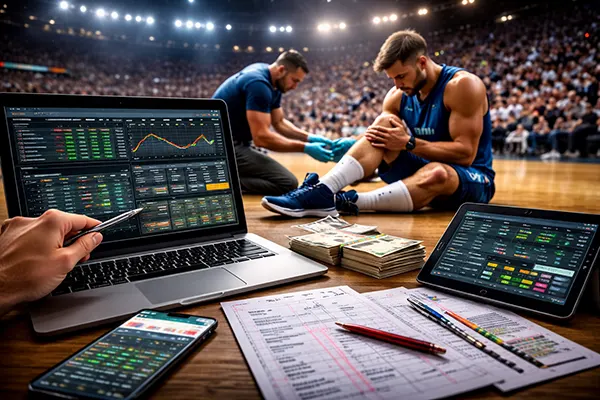
By 2026, the speed of information is a defining factor. Injury news spreads instantly through official club channels, analytics platforms, and social media. Bookmakers respond rapidly, but there is still a short window where odds may not fully reflect the true impact of the absence.
Professional bettors focus on timing. Early reactions often target totals and player props before markets stabilise. Later movements tend to correct initial overreactions, especially when the market realises that a team’s system can compensate for missing individuals.
Another emerging trend is the use of predictive injury impact models. These tools analyse historical data to estimate how specific players influence various metrics. While bookmakers use similar models, independent analysis can still uncover discrepancies, particularly in less prominent competitions.
Long-Term Patterns and Strategic Betting Approaches
Over a full season, injury patterns reveal consistent trends. Some teams maintain performance despite absences, indicating strong squad depth and tactical flexibility. Others show clear declines, making them vulnerable not only in match results but across multiple statistical markets.
Understanding these patterns allows bettors to move beyond reactive strategies. Instead of chasing news, they can anticipate how certain teams behave under pressure, identifying value before odds adjust. This approach aligns with the broader shift towards data-driven betting.
Ultimately, injuries are not just disruptions—they are catalysts that reshape the entire betting landscape. Those who analyse their effects across both primary and secondary markets gain a more complete view of how modern sports betting operates.