
Women’s Football 2025/26: How Pace, Style and League Structures Differ Across Europe
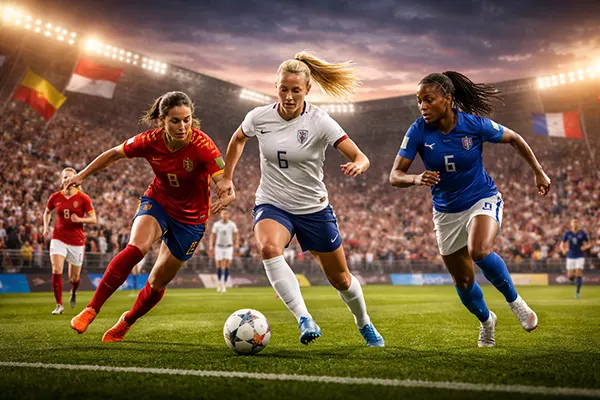
The 2025/26 season sits at a turning point for women’s football in Europe. The sport is no longer defined only by rapid growth and headline attendance numbers; it is now shaped by tactical identity, professional depth, and the structures that govern how clubs compete week-to-week. Across Europe, the tempo of matches, the dominant styles of play, and even the calendar itself differ sharply from league to league, and those differences affect everything from player development to how teams perform in Europe.
Why the pace feels different from league to league
Tempo in women’s football is often discussed as a single idea, but in reality it is a mix of pressing intensity, the speed of ball circulation, transitional frequency, and how quickly teams can attack space. In 2025/26, these elements vary dramatically across Europe because leagues have different competitive balances. A league with more evenly matched teams usually produces higher-intensity games across the table, while a league dominated by a small group of clubs can create rhythm changes: fast in big games, slower in fixtures where one side expects to control the ball for long periods.
England’s Women’s Super League (WSL) continues to push an “every match matters” feel, partly because the financial and technical level of the league keeps rising. The season structure also creates pressure: with changes approved for the coming expansion to 14 teams in 2026/27, 2025/26 becomes a particularly tense campaign where the bottom of the table is not simply a quiet relegation battle. The top two in WSL2 are set to go up, and the bottom WSL team faces a play-off against the third placed WSL2 side, which encourages risk-taking late in the season and can raise game intensity.
In contrast, some leagues have more pronounced gaps between the top and mid-table. That can reduce pressing urgency in certain matches and lead to longer spells of controlled possession. However, this does not automatically mean “slower football”; it often means the pace shifts from end-to-end transitions to structured build-up, with teams managing the match through positioning and set patterns.
Pressing cultures and what they do to tempo
Pressing is one of the clearest ways to “see” tempo differences. In leagues where coaches and squads have embraced coordinated high pressing, matches can feel relentless: turnovers are frequent, and attacks begin closer to goal. This style is common in environments with strong sports science support and deep benches, because pressing demands repeated sprint efforts and fast recovery. When teams have the conditioning and tactical training to sustain it, the whole league’s pace rises.
In leagues that lean more towards mid-block defending and controlled possession, tempo looks different. The match may involve fewer high-speed transitions, but the technical speed can be high: quick short passing, sharp third-player combinations, and deliberate attempts to draw opponents out. Here, “pace” is less about sprinting and more about decision-making under pressure, with teams trying to manipulate defensive shapes rather than simply outrun them.
The 2025/26 European context also matters. With the UEFA Women’s Champions League using a league phase format and an 18-team table, top clubs play six different opponents rather than the previous double round-robin against three teams. That increases stylistic variety and forces clubs to prepare for different pressing identities in a shorter time, which can feed back into domestic football: teams practice more game models and adapt more quickly.
How style of play is shaped by domestic structures
When people compare leagues, they often focus on star players, but structure matters just as much. League format, promotion and relegation pressure, squad registration rules, and travel demands all influence what kind of football is rewarded. In a league where dropping points is punished immediately and the mid-table is competitive, clubs often play more assertively. In a league with fewer truly competitive fixtures, teams can be more patient, knowing they can reset and still achieve their objectives.
The WSL’s move towards a bigger league in 2026/27 affects how clubs approach 2025/26, because the promotion and survival landscape is changing. This kind of structural adjustment tends to speed up tactical evolution: clubs invest earlier, improve recruitment, and become less conservative, because staying in the top division carries greater long-term value. In practice, that creates more intense matches, particularly in the lower half, where the cost of finishing bottom is high due to the play-off risk.
Across Europe, another structural driver is how clubs balance domestic priorities with Europe. The new Champions League league phase increases match variety and can create workload peaks. Domestic leagues that have deeper squads and better resource distribution can maintain style consistency across the season, while leagues with less depth can see tactical compromises: slower build-up, more conservative pressing, or heavier reliance on set pieces when fatigue accumulates.
European competitions are changing domestic tactics
The Champions League format change is not a minor administrative detail; it changes preparation. Instead of repeatedly facing the same opponents home and away, clubs face six different teams in the league phase, with half of the matches at home and half away. That reduces predictability and increases the value of tactical flexibility. Many clubs now treat adaptability as a core skill rather than a “Plan B”, and this is influencing domestic football: teams train multiple build-up patterns and pressing triggers because European opponents are less familiar.
This shift also affects style in leagues with dominant clubs. If top teams are constantly tested by varied European opponents, they bring back more complex tactical ideas to domestic games. That can increase the speed of ball circulation, improve pressing coordination, and raise the overall technical level. Over time, leagues that supply multiple Champions League-calibre teams tend to develop richer tactical diversity because clubs cannot rely on a single approach.
For viewers, the result in 2025/26 is that “league style” is becoming less predictable. England remains intense and transition-heavy in many matches, Spain often showcases technical possession and positional play, and France tends to blend athleticism with directness, but the lines are less strict than before because European schedules and scouting are pushing coaches to adopt hybrid models.

How league design affects competitiveness and player development
League structure does not just decide who wins titles; it decides what players learn. A league with intense mid-table competition forces players to operate under pressure weekly, improving speed of thought and resilience. A league with fewer close matches may create a different pathway: top players get high-quality minutes in Europe and in domestic “big games”, while others develop through tactical discipline and structured roles rather than constant high-intensity chaos.
England’s confirmed expansion to 14 teams from 2026/27 is a clear example of structural ambition. For 2025/26, the key point is the ripple effect: clubs in the second tier have a stronger incentive to invest because two automatic promotion places exist for the following season, and the third place can still reach the top division via a play-off. This tends to raise standards in recruitment, coaching, and sports science across more clubs, not only at the top.
At the European level, Nations League and international tournament cycles also shape development because they influence player availability and fatigue. The UEFA Women’s Nations League timeline in 2025 includes group matches early in the year and finals in late 2025, and the results connect to longer-term World Cup qualification pathways. That means 2025/26 club seasons are played by squads that may be managing significant international workloads, and leagues that can rotate effectively will often maintain higher tempo and sharper pressing later in the season.
What this means for the 2025/26 viewing experience
For anyone watching women’s football in 2025/26, the most noticeable change is variety. A single weekend can include a frantic, transition-heavy contest in England, a tactical positional chess match in Spain, and a physically intense, direct encounter elsewhere. This is not about one league being “better”; it is about how rules, competitive balance, and club resources shape what is rewarded.
It also means that comparing players across leagues is harder than it used to be. A midfielder thriving in a slower, possession-heavy system may need time to adapt to a league where pressing duels and second balls dominate. Similarly, a forward who excels in high-tempo counter-attacks might need different movement patterns in a league where defences sit deeper and build-up is slower and more deliberate. Context matters, and in 2025/26 that context is wider than ever.
The upside is that Europe is developing a richer football landscape. As the Champions League league phase introduces more diverse matchups and domestic leagues adjust their structures, the women’s game becomes more tactically layered. In practical terms, that means more styles, more challenges, and more reasons to follow more than one league if you want the full picture of where women’s football is heading.